A user research study aimed to understand how UW students choose where and how to study
ROLE
UX Researcher
TIMELINE
Autumn 2025
6 weeks
METHODS
Field Observations
Interviews
Surveys
01 OVERVIEW
PROBLEM
University library spaces are heavily used, but many are not designed around how students actually study today. Students rely on personal devices, need consistent power access, and are sensitive to comfort and environmental factors, yet many library layouts still prioritize outdated technology and rigid seating.
OUTCOME
Identified three design priorities for improving campus library study spaces:
01
Power access shapes behavior more than any other factor
02
Comfort and lighting affect study duration
03
Library spaces should be designed for personal device workflows
DESIGN QUESTION
How can campus library study spaces, especially Odegaard, be redesigned to better support students’ study habits, device needs, and environmental preferences?
WHY THIS MATTERS
→
Students depend on comfortable, functional study spaces to stay focused and productive
→
Poor layouts force students to move, adapt, or leave early
→
Small design changes can significantly impact productivity and comfort
02 FIELD OBSERVATIONS
OBSERVATIONS
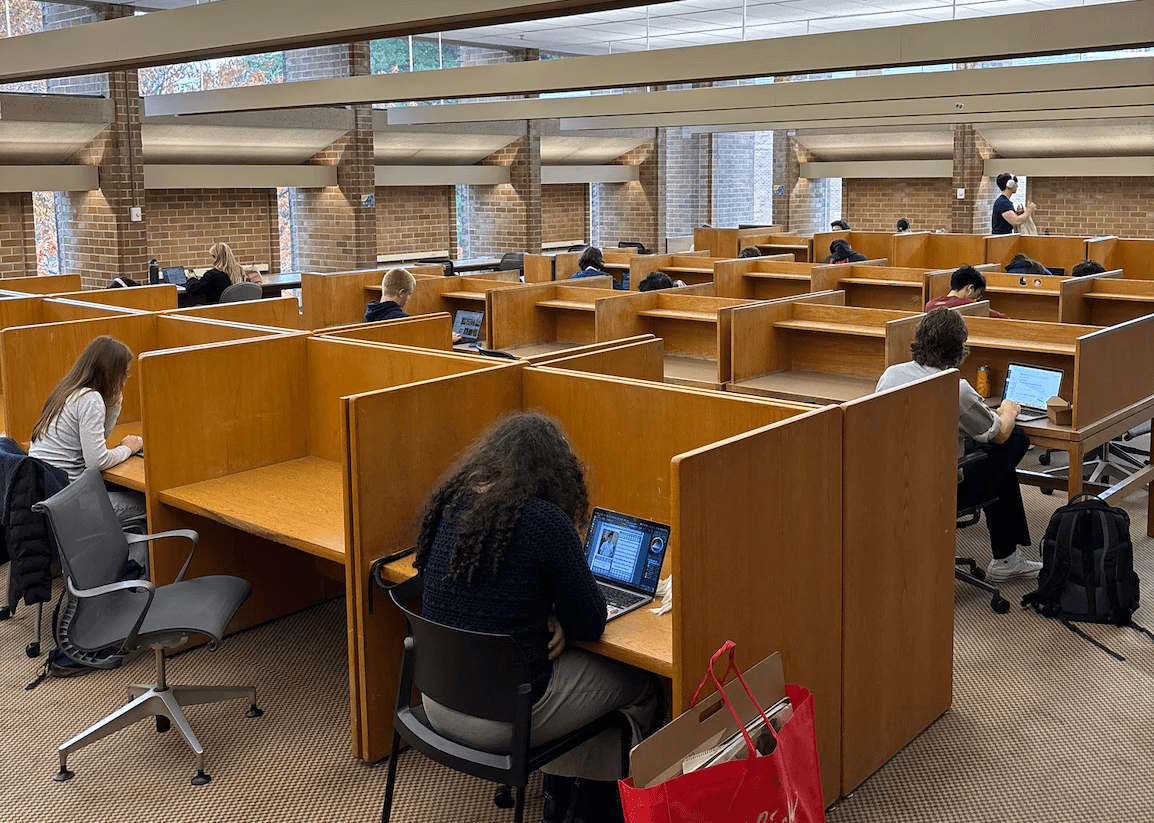
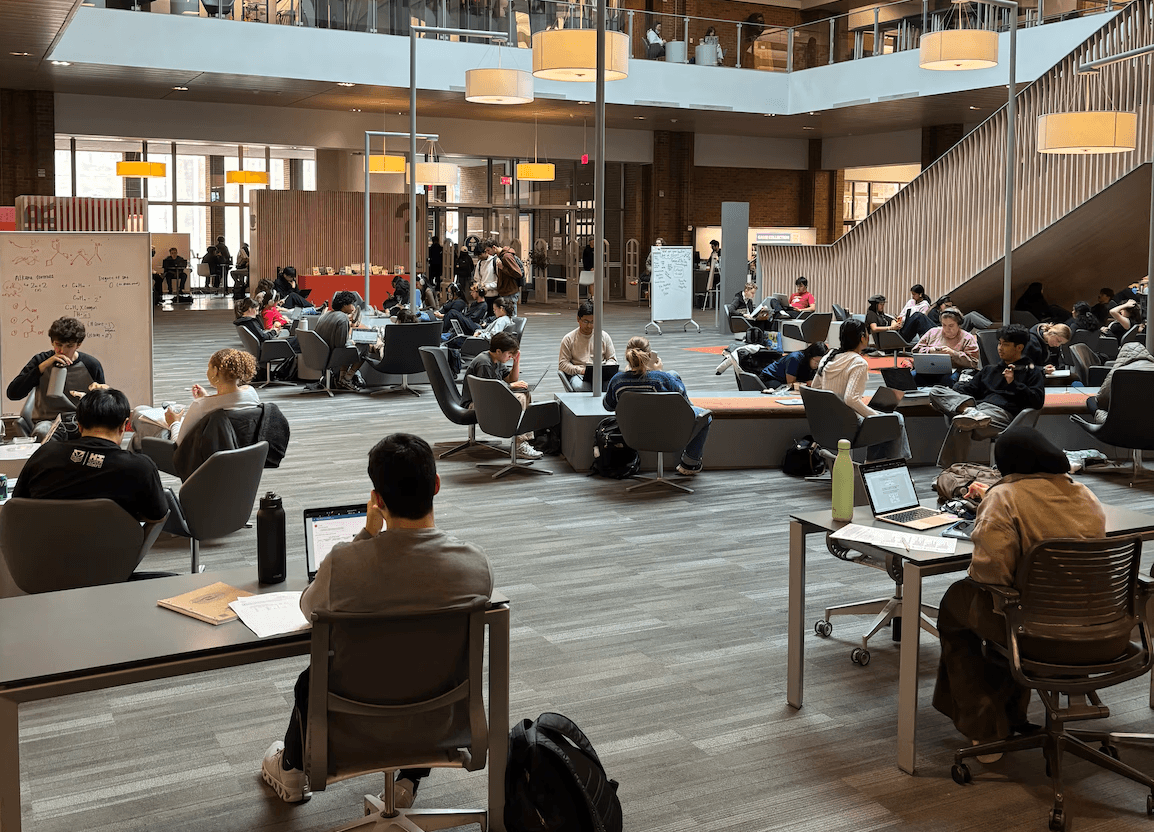
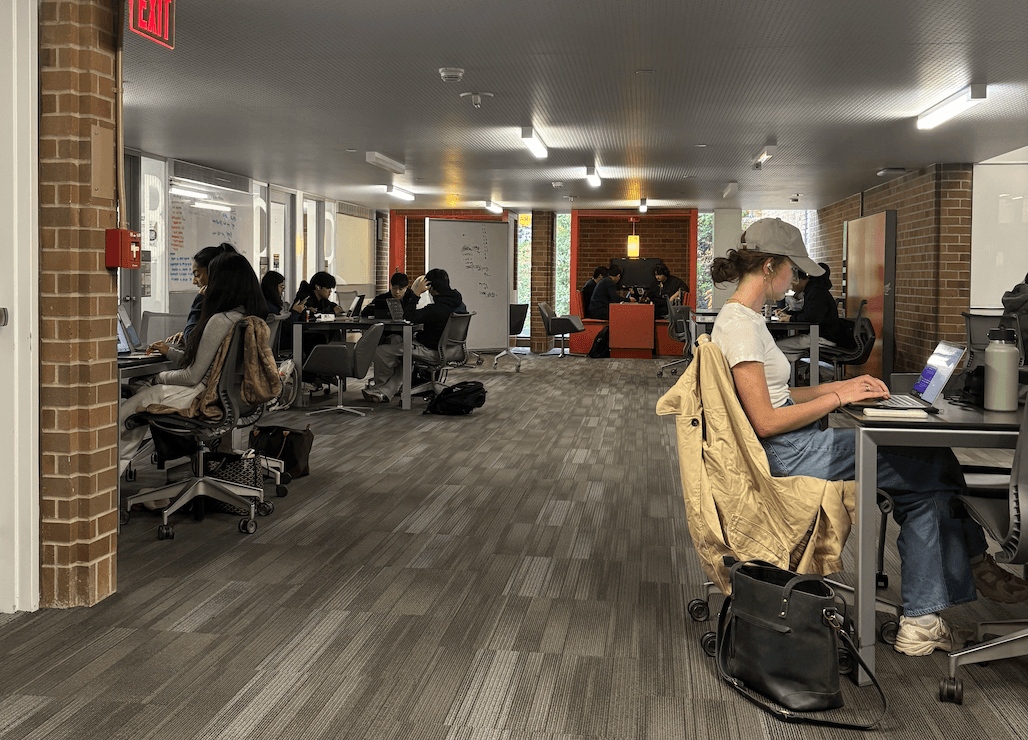
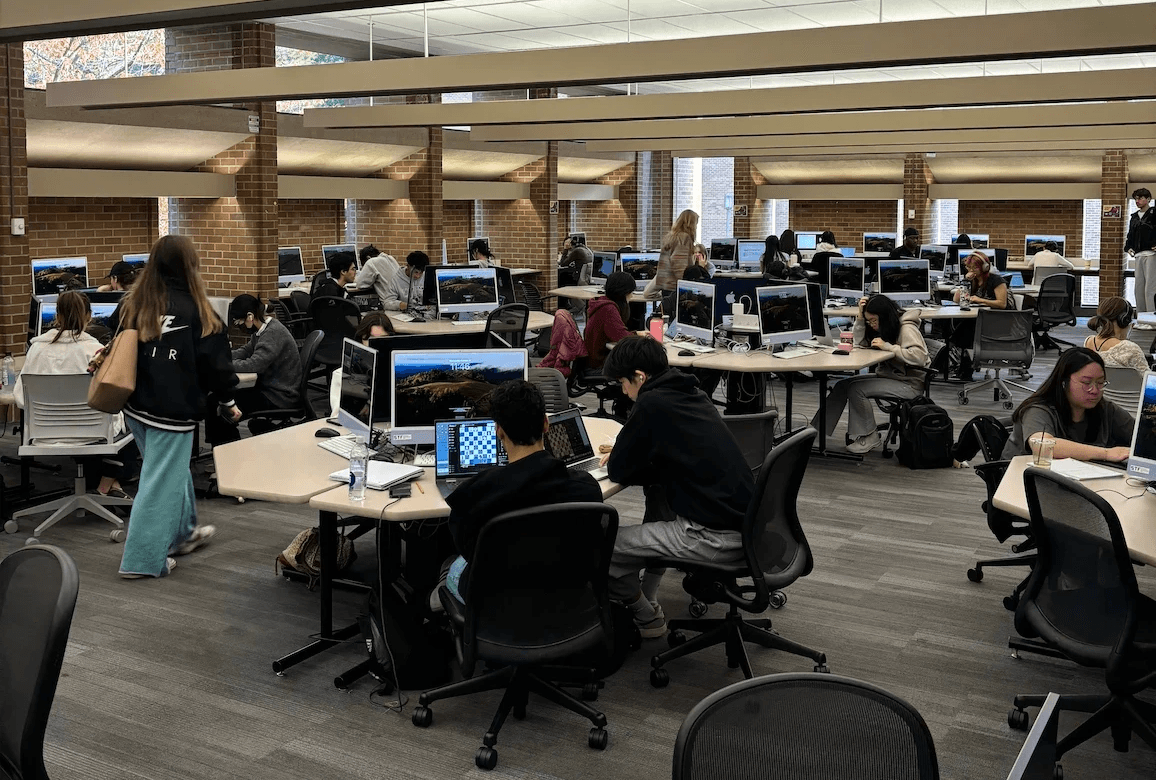
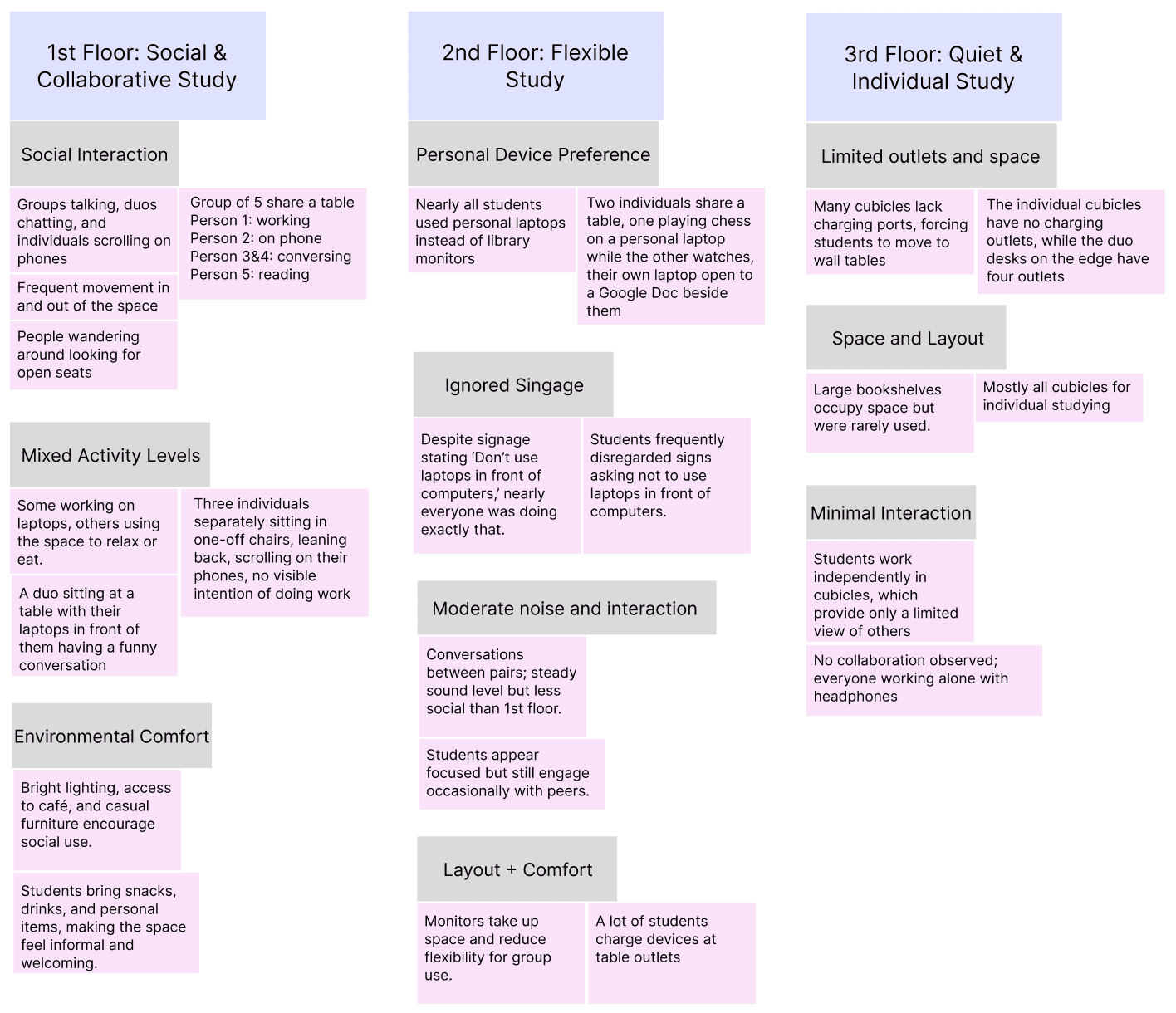
I conducted structured observations across three floors of Odegaard:
→
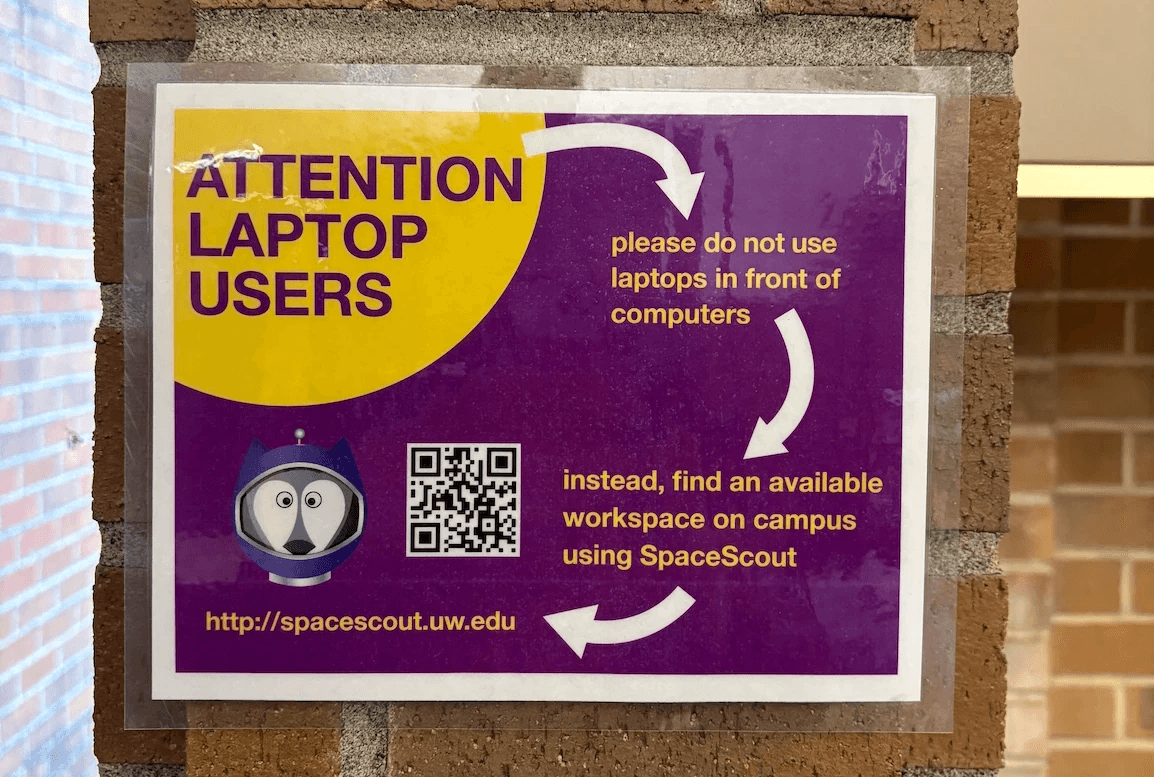
1st floor: Social, high movement, mixed-use
→
2nd floor: Flexible work with background noise
→
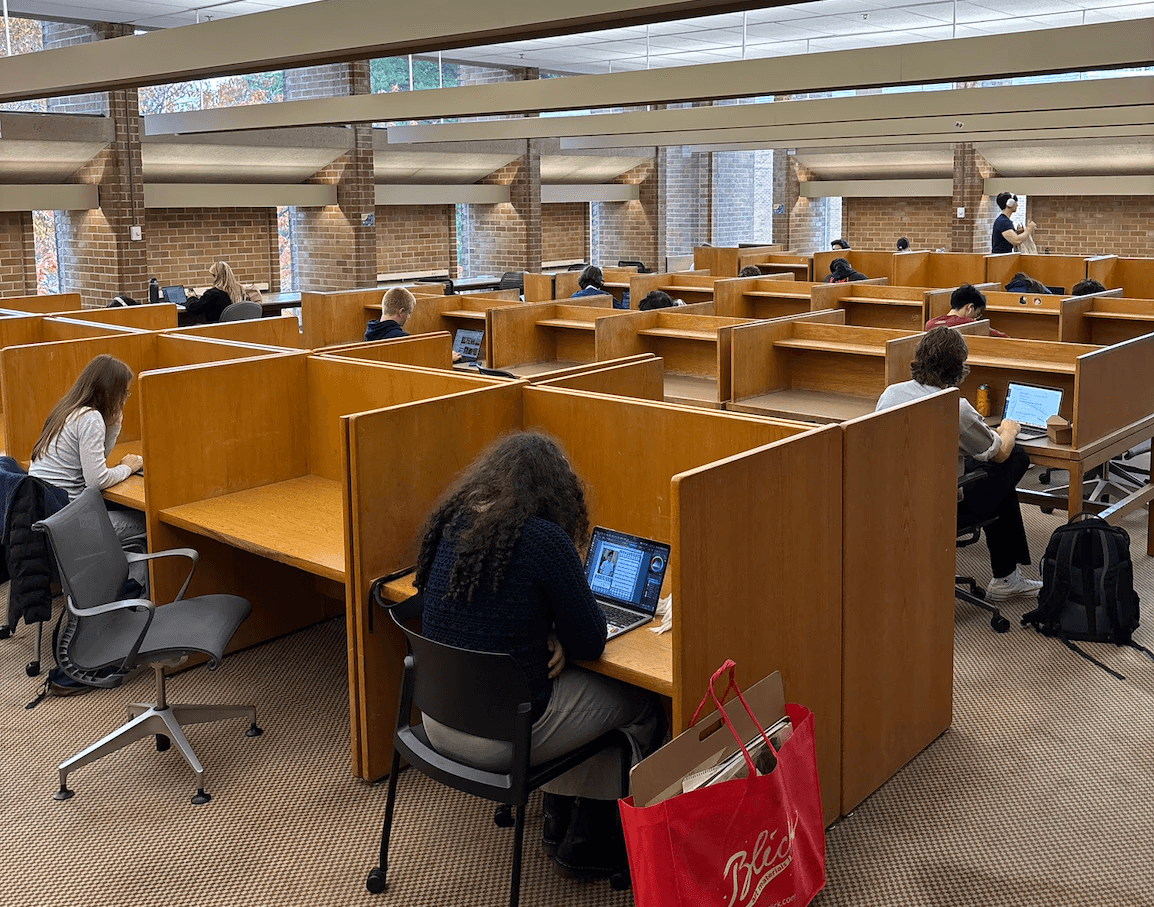
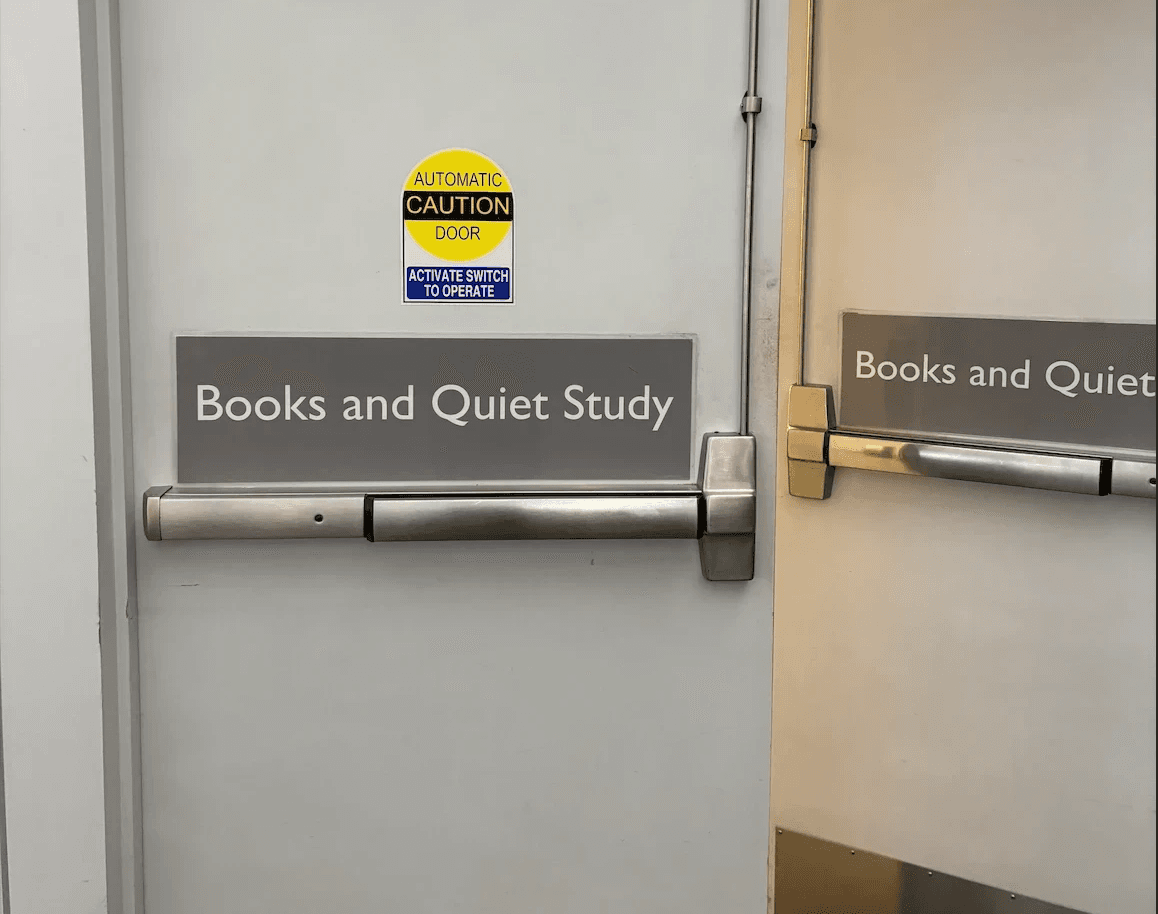
3rd floor: Silent, individual study
KEY PATTERNS
→
Students clustered around powered seating
→
Desktop monitors were rarely used
→
Students adjusted spaces using personal devices and belongings
TOOLS
→
Laptop for field notes
→
Phone to for photo documentation
→
FigJam for affinity mapping
FIRST FLOOR
SECOND FLOOR
THIRD FLOOR
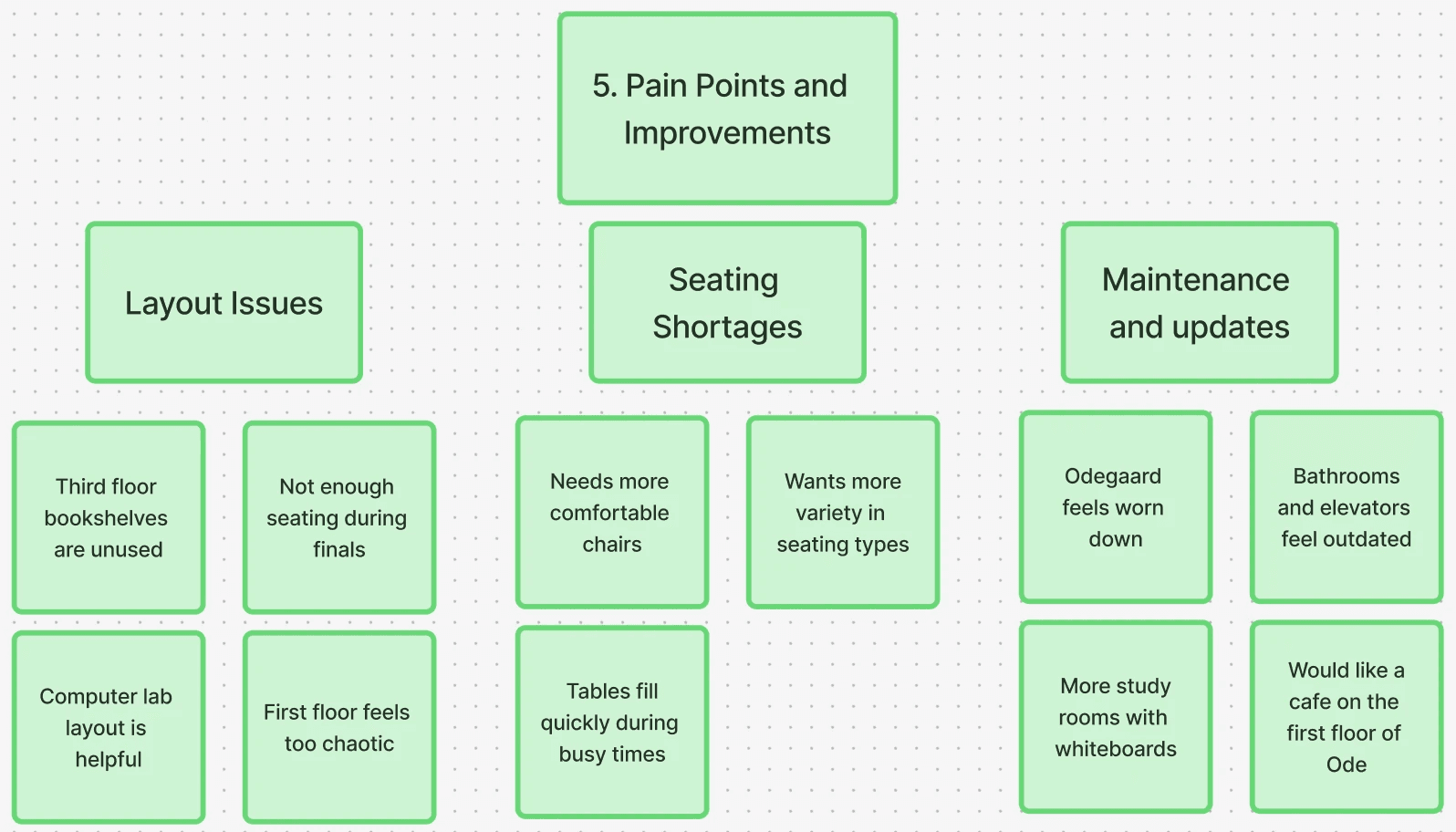
AFFINITY DIAGRAM
03 INTERVIEWS
INTERVIEWS
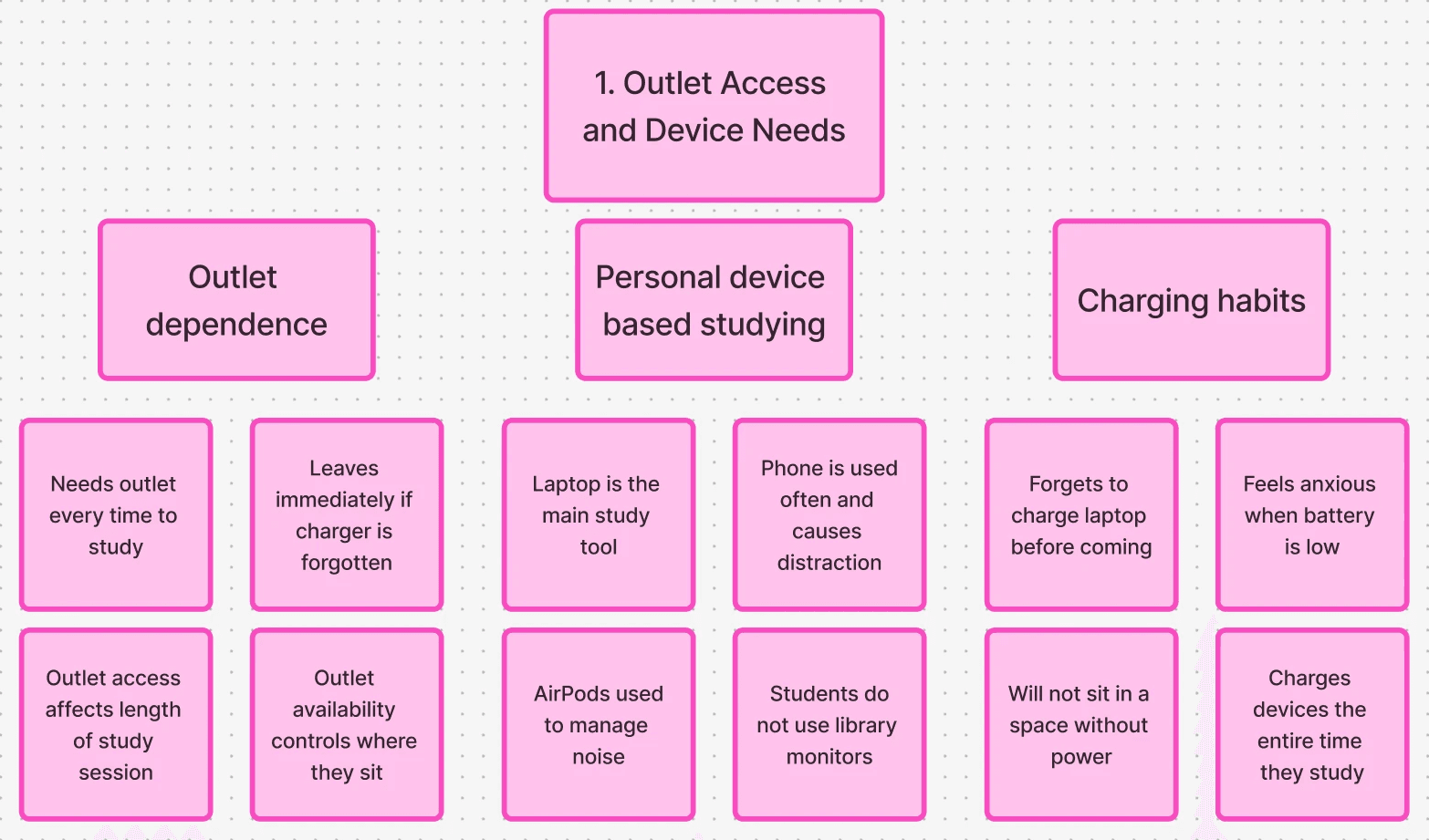
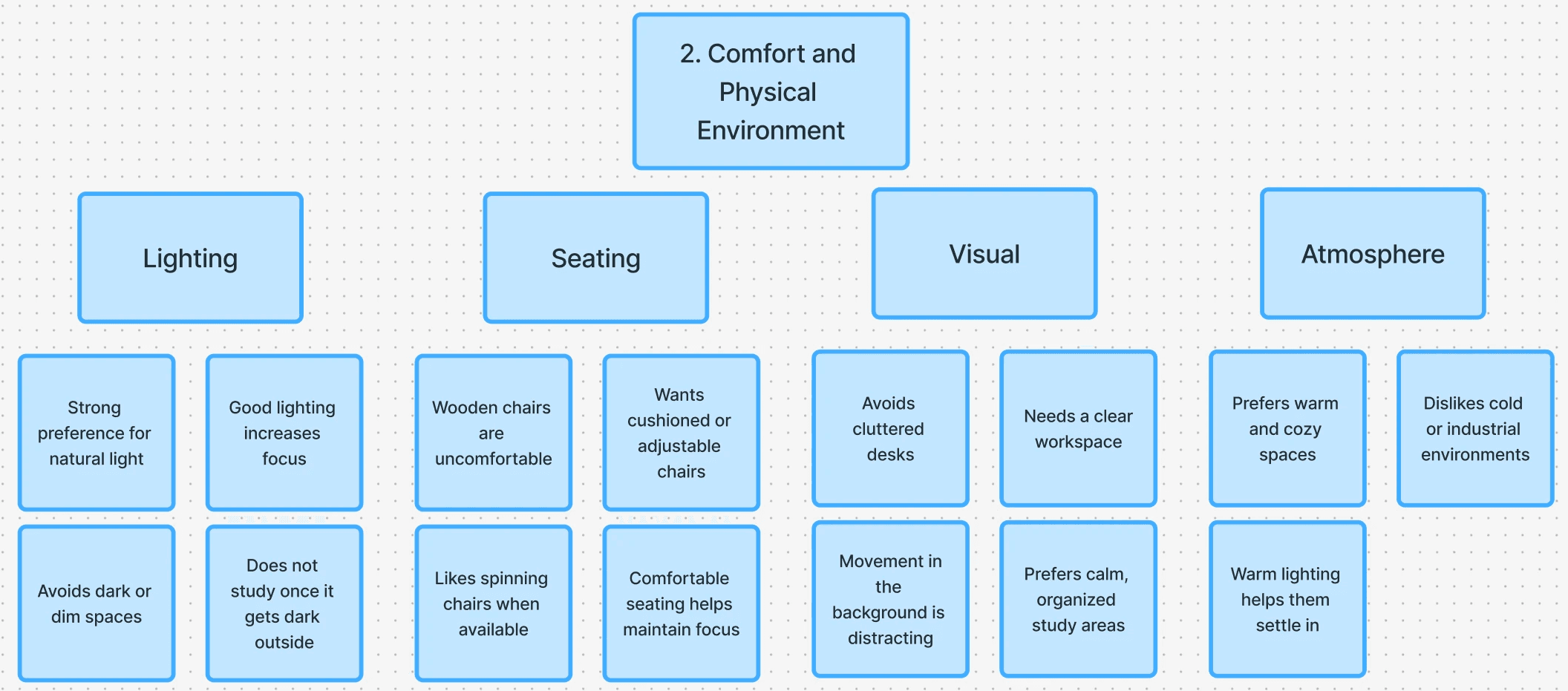
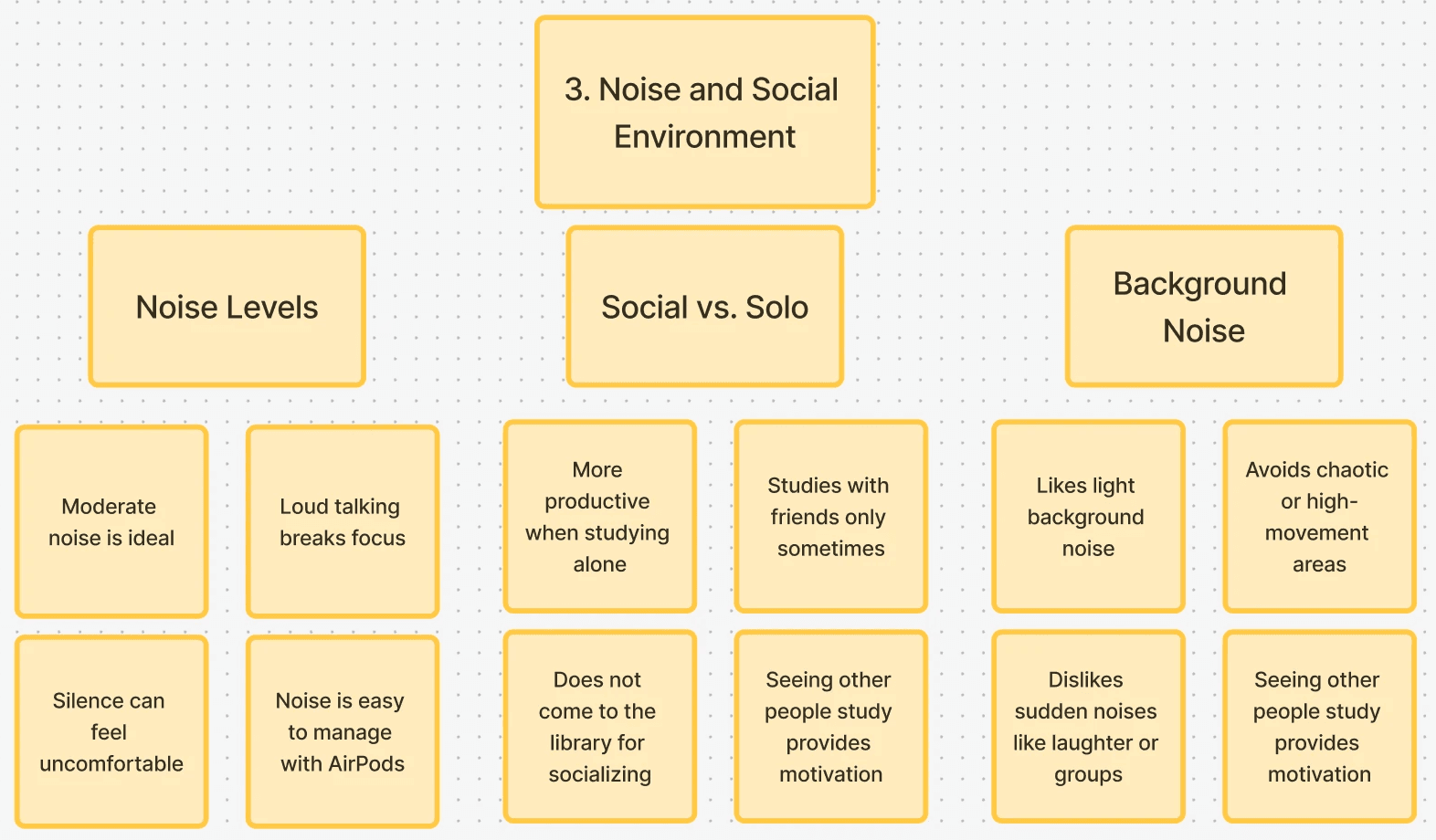
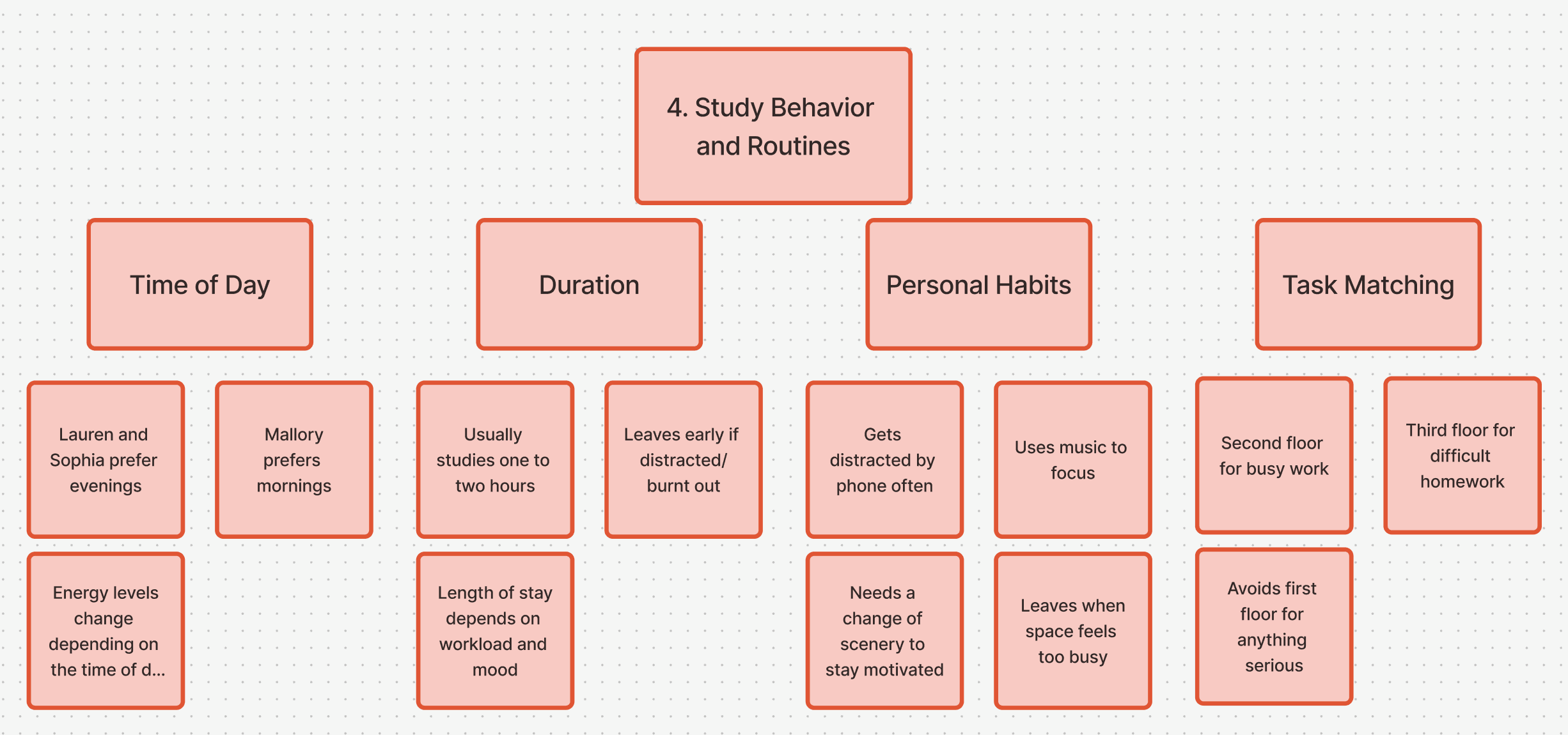
To understand why these observed behaviors were happening, I conducted semi-structured interviews with UW students who study in campus libraries regularly. These interviews explored:
→
How students decide where to sit
→
What makes a space comfortable or uncomfortable
→
How environmental and social factors affect focus
→
Common frustrations
KEY THEMES
→
Outlet access determines both seat choice and study duration
→
Comfortable seating and lighting support longer focus
→
Students rely almost entirely on personal devices
→
Visual clutter and discomfort are harder to ignore than noise
TOOLS
→
Phone for audio recording
→
Laptop for interview questions + protocol guide, notes
→
OtterAI for transcription
→
FigJam for affinity mapping
AFFINITY DIAGRAM
04 SURVEYS
DESIGN
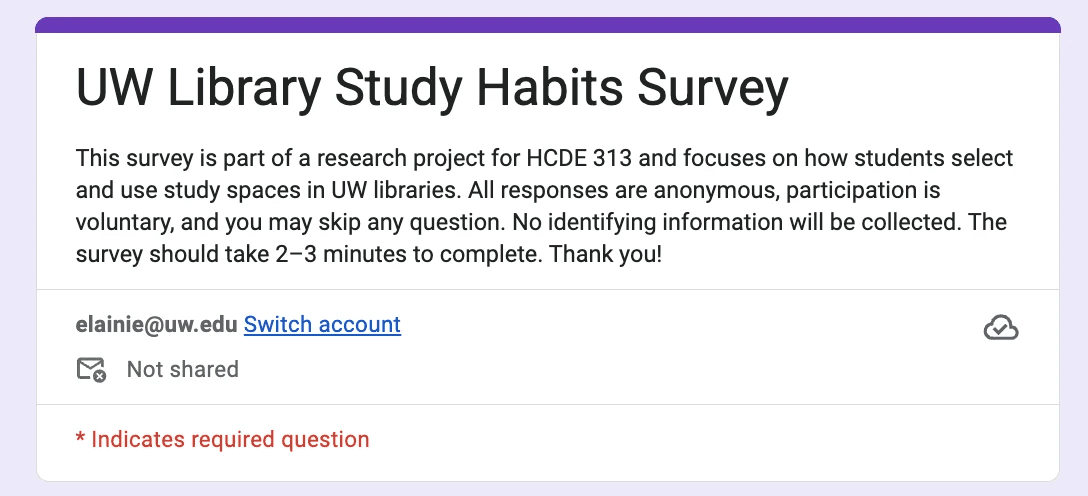
To validate and extend findings, I designed and deployed a survey:
→
Participants: 19 UW students who recently studied in campus libraries
→
Survey Goals:
Confirm how common observed behaviors are
Prioritize which issues matter most
Extend findings to a larger group
→
TOOLS
→
Google Forms for survey creation
→
Spreadsheets for data cleaning, analysis, and chart creation
GOOGLE FORM
05 FINDING 1: OUTLET ACCESS SHAPES SEATING BEHAVIOR
→
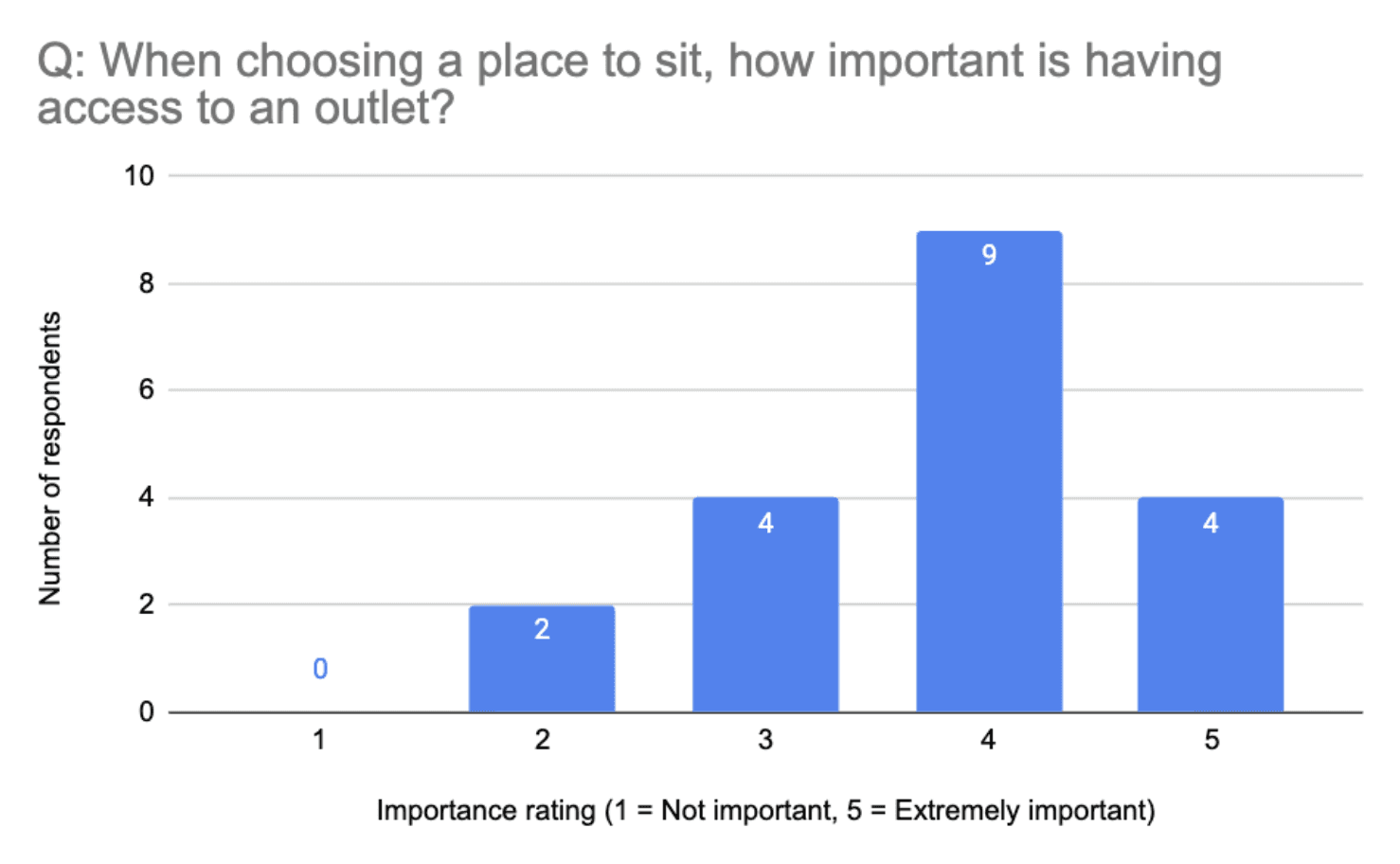
Students rated outlet access as one of the most important factors when choosing where to sit
→
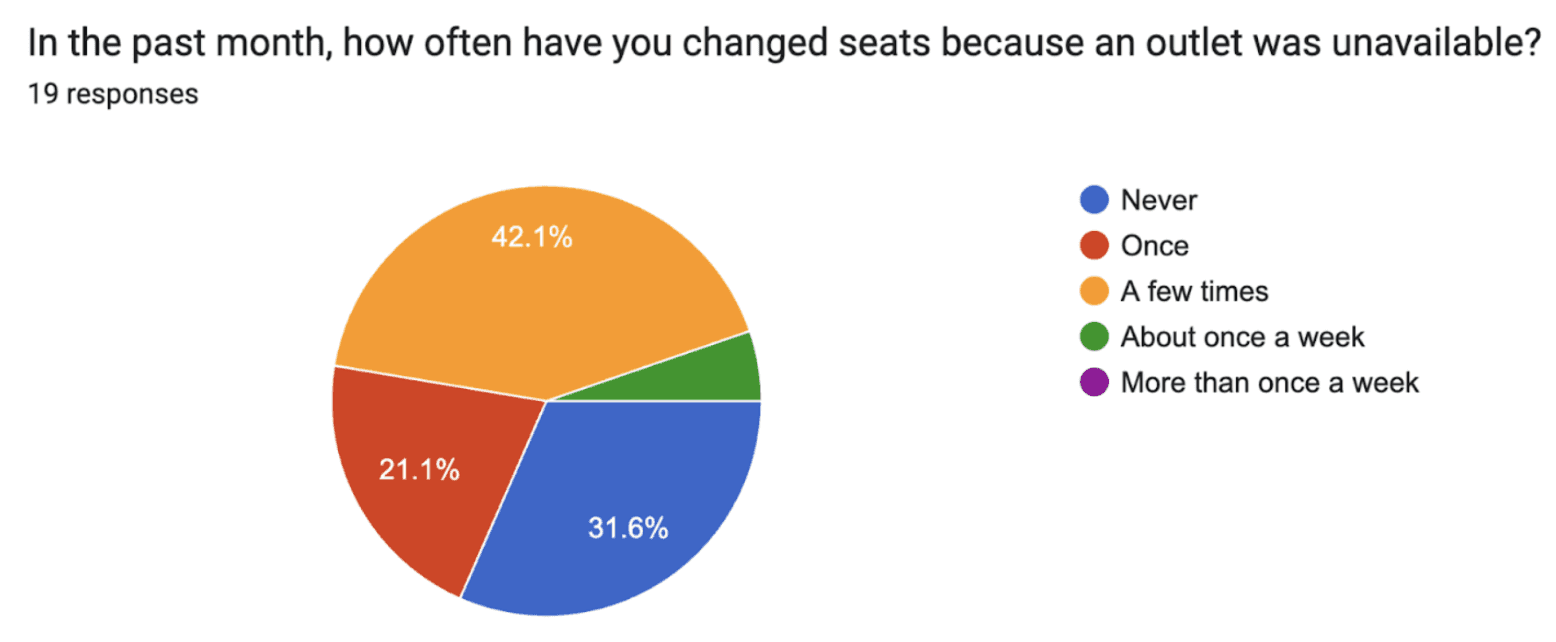
Many reported moving seats or leaving early when outlets were unavailable
SURVEY EVIDENCE
MEANING
→
Power access is a basic requirement for studying
→
Areas without outlets are unusable for long study sessions, even when seating is available
06 FINDING 2: COMFORT AND LIGHTING AFFECT STUDY DURATION
→
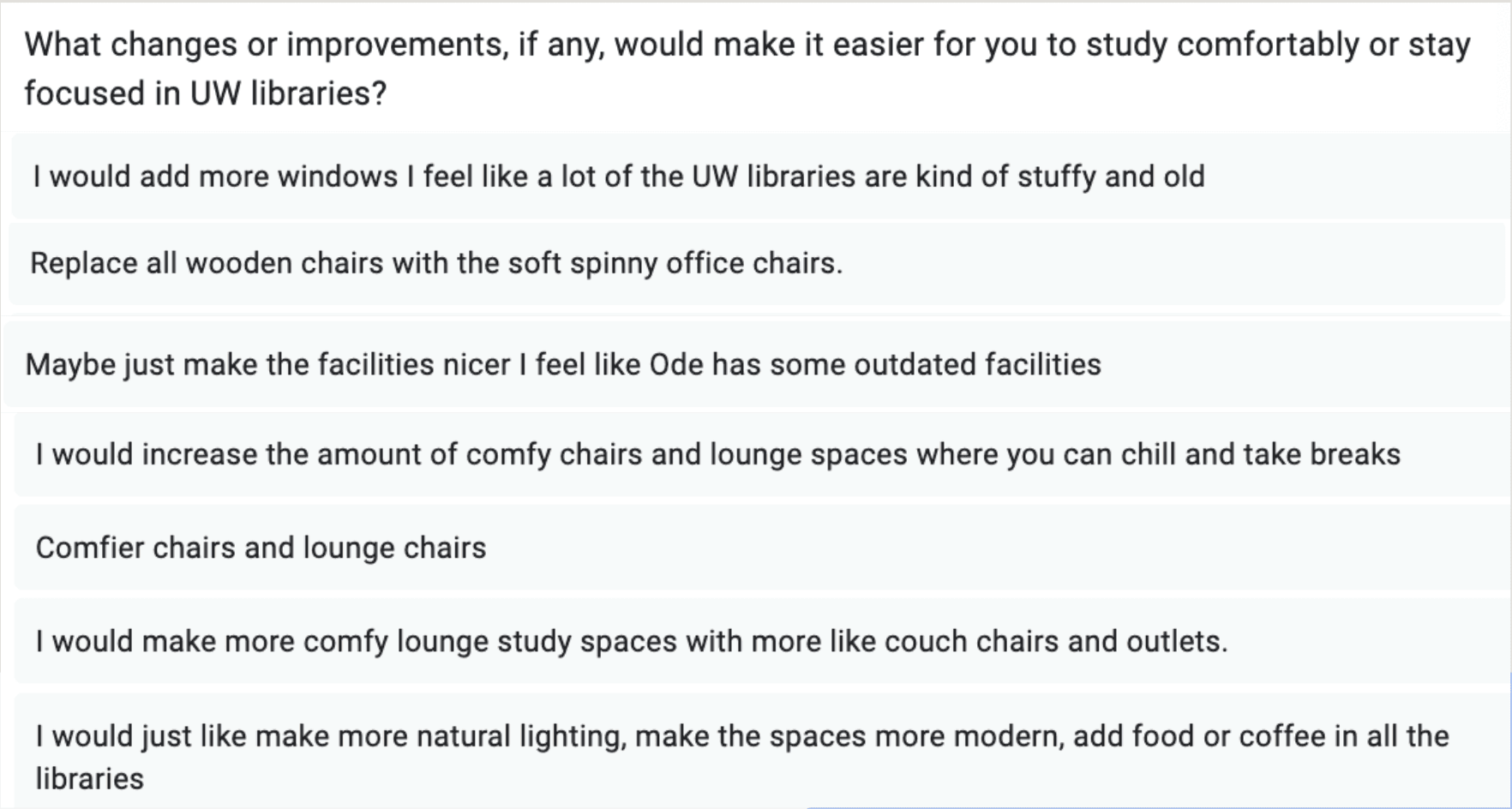
Students consistently requested more comfortable furniture, better lighting, and modernized spaces
→
Hard chairs, dim lighting, and outdated environments made it difficult to stay focused
SURVEY EVIDENCE
MEANING
→
Comfort directly supports sustained studying
→
Students struggle in uncomfortable environments
07 FINDING 3: STUDENTS STUDY ON PERSONAL DEVICES
→
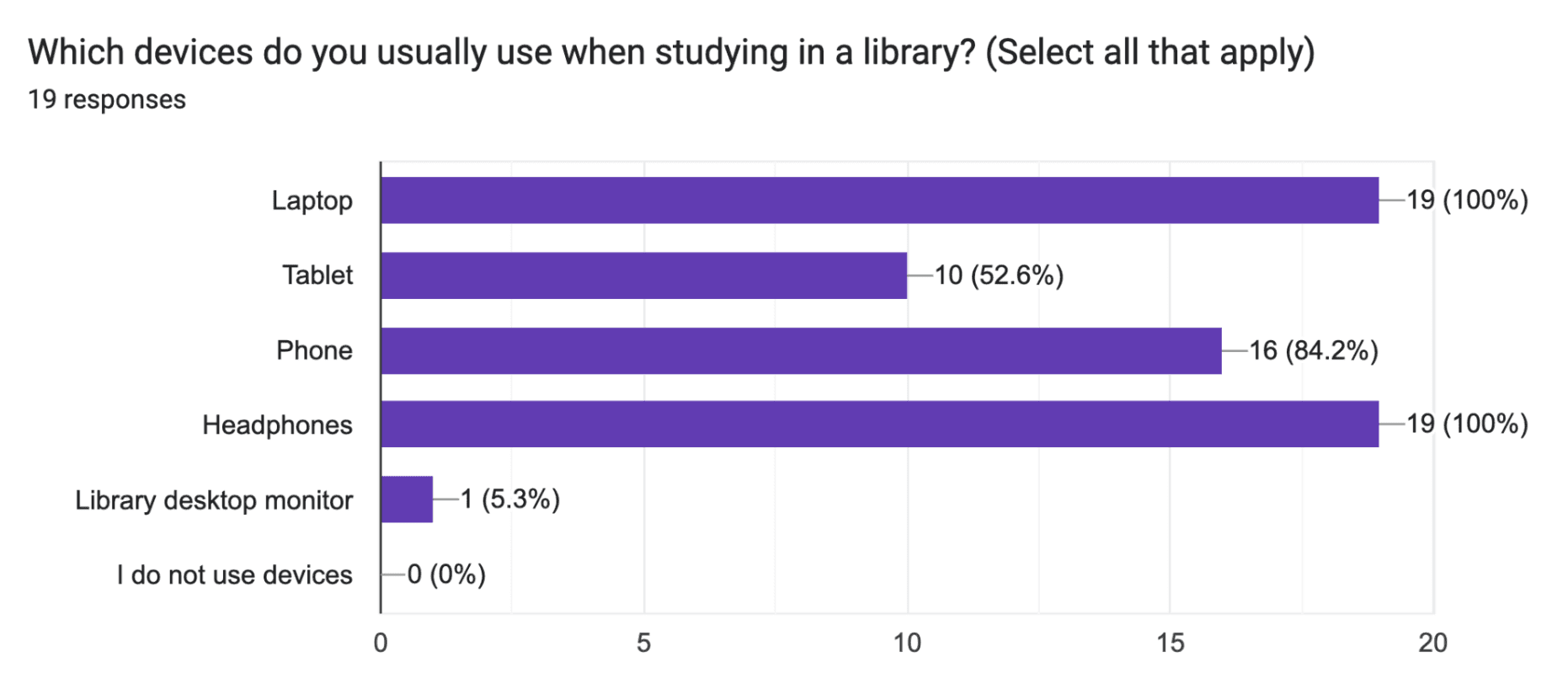
Nearly all students use laptops and headphones as their primary study tools
→
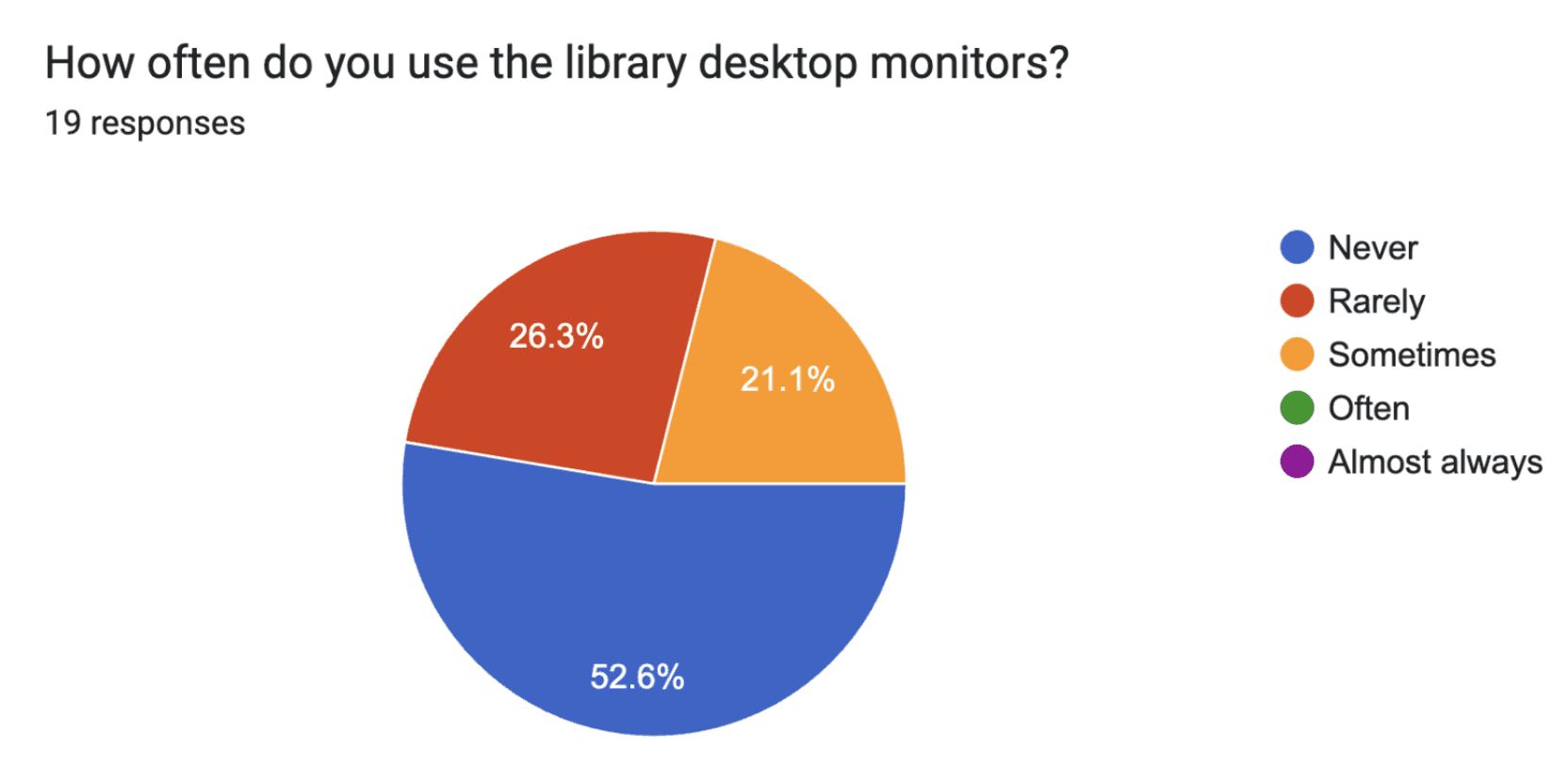
Desktop monitors and shared computers are rarely used despite the volume available
SURVEY EVIDENCE
MEANING
→
Library technology does not match current study behavior
→
Fixed monitor stations take up space without providing value for most users
08 DESIGN RECOMMENDATIONS FOR ODEGAARD LIBRARY
INCREASE OUTLET ACCESS
→
Add outlets to 3rd floor quiet-zone cubicles
→
Improve power distribution across all floors
→
Offer portable chargers for checkout
MODERNIZE AND EXPAND COMFORTABLE STUDY SPACES
→
Replace wooden chairs with cushioned seating
→
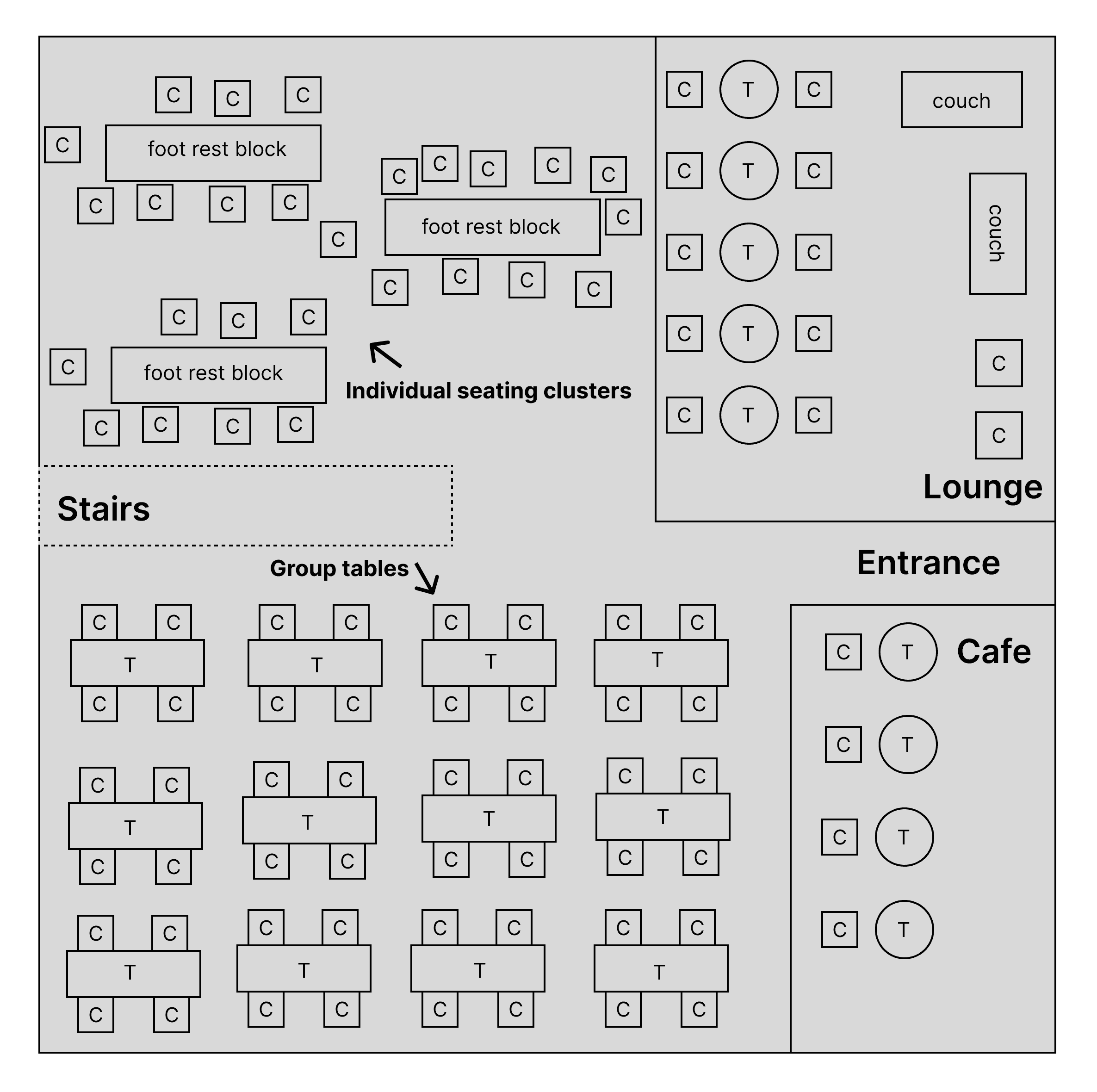
Add lounge seating for relaxed study sessions
→
Improve natural and warm lighting
→
Update older facilities to feel clean and modern
REDESIGN OF ODEGAARD 1ST FLOOR LAYOUT
DESIGN AROUND PERSONAL WORKFLOWS
→
Reduce fixed desktop monitor stations
→
Add larger desks for laptops and tablets
→
Offer monitors for reservation instead of permanent installation
PRIORITIZATION
01
Increase outlet access
02
Modernize and expand comfortable study spaces
03
Design around personal workflows
09 REFLECTION
NEXT STEPS
→
Survey a larger and more diverse student population
→
Compare behaviors across different libraries and times of day
→
Test redesigned seating and proposed solutions through small pilot studies
NOTES
→
What I'd do differently: expand recruitment to allow for stronger comparisons across majors, class years, and study habits
→
What surprised me: How consistently students asked for more modernized, comfortable spaces across open-ended responses
→
What was challenging: Cleaning survey data and synthesizing trends across different question types
WHAT I LEARNED
This project demonstrated how combining qualitative and quantitative research can uncover clear, actionable insights. By grounding design recommendations in real behavior, it taught me how UX research can meaningfully improve physical environments that humans rely on every day.